

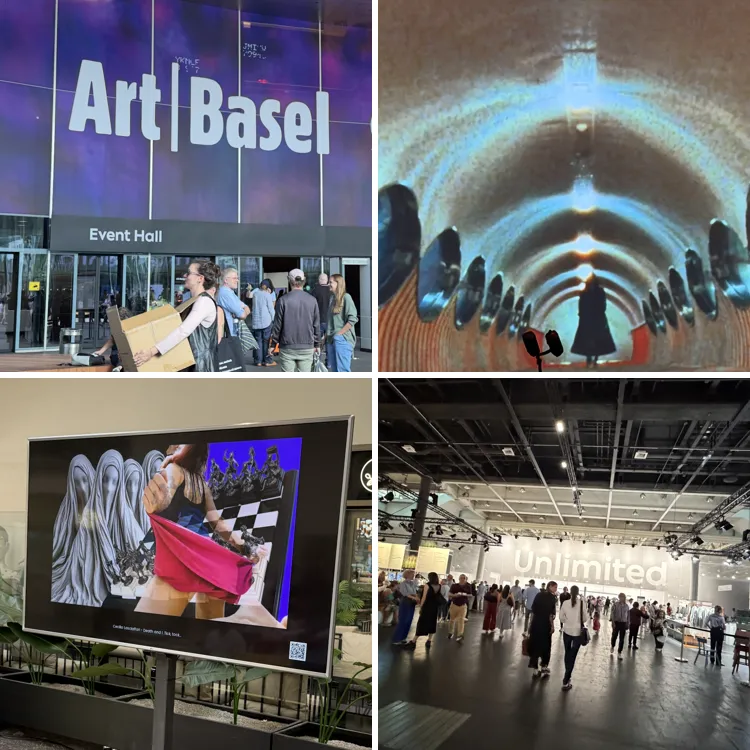
ART BASEL 2026, UNLIMITED, ZERO 10: Digital Art, AI and the Question of Time.
I visited Art Basel 2026 in search of Europe’s answer, in digital and generative AI art, to the opening of DATALAND in Los Angeles, the world’s first museum dedicated to AI Art, which opened on June 20, 2026. I wanted to see what the European artistic scene would put forward: latent space, generative algorithms, new forms of art.
I found something more complex and interesting than a simple answer: a mix of ambition, research, and a commitment to local culture that refuses to completely abandon its physical form, along with a question that accompanied me from one pavilion to the next: when we look at digital art, who owns time today?
DATALAND’s monumental scale is not easy to replicate. At Zero 10, though, I found a different kind of art: not one that towers over the viewer, but a digital art that stays human-sized.
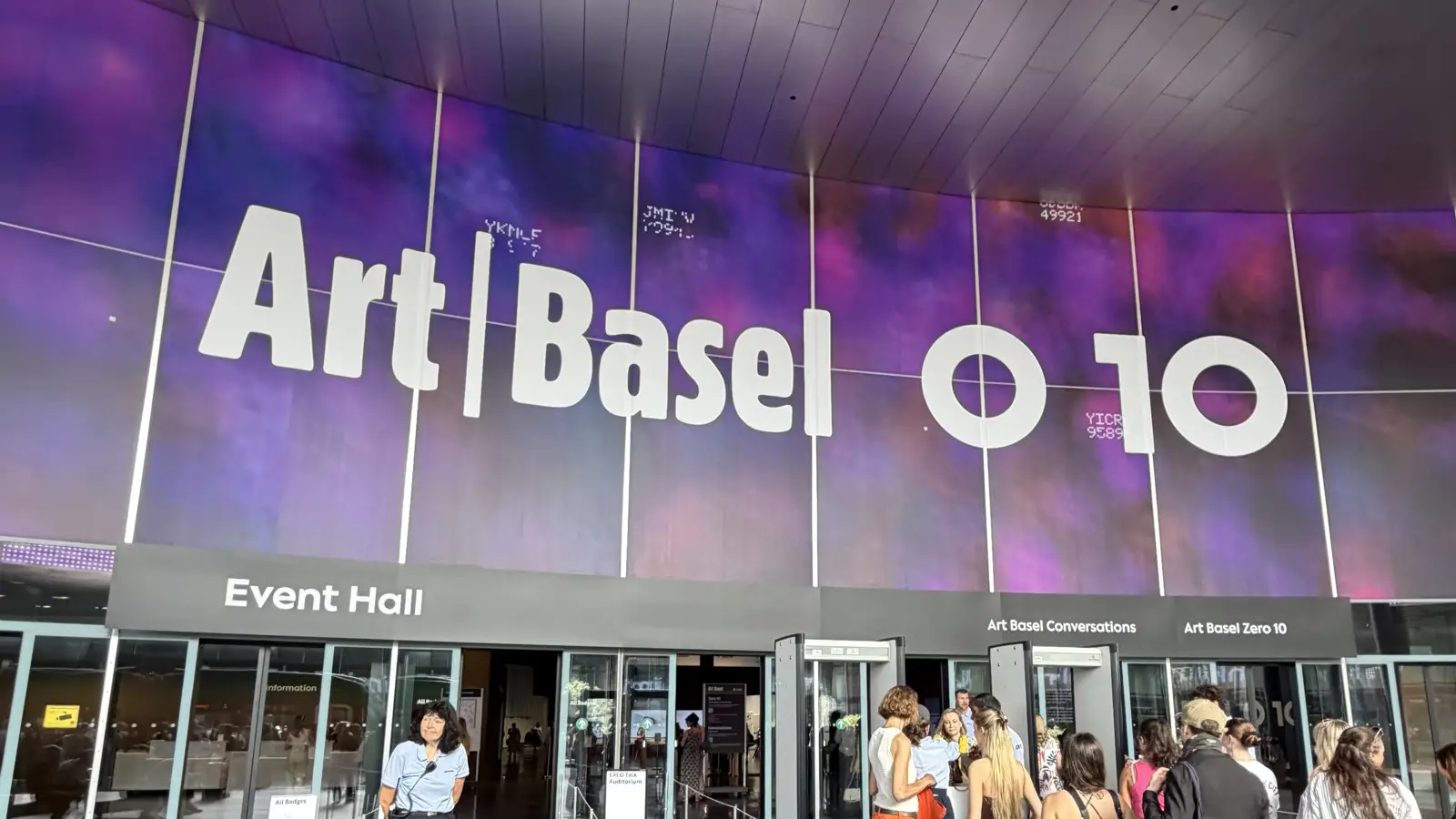
Art Basel 2026 started from June 18 to 21 as the most closely watched moment of the international art market. According to Art Basel’s own closing report, the edition welcomed 90,000 visitors, brought together 290 galleries from 43 countries, and drew an audience from 103 countries, with more than 270 museums and foundations attending [Art Basel, “Art Basel 2026 closes with strong sales and global engagement”, artbasel.com].
It was also the European debut of Zero 10, Art Basel’s platform dedicated to the art of the digital era, in its largest edition to date, co-curated by digital art strategist Eli Scheinman and artist Trevor Paglen.
Zero 10: the works that hold you, and the works that lose you
Eli Scheinman, Co-Curator & Program Lead, is a digital art strategist working at the intersection of art, technology, and collecting. Through Zero 10, he foregrounded artists and galleries whose practices are redefining how art is created, experienced, and exchanged.
Trevor Paglen, Co-Curator & Program Lead, is a Artist and researcher Trevor Paglen examines the invisible infrastructures shaping contemporary life, from AI and surveillance to data networks. His work reveals how power operates through the hidden architectures of technology.
Zero 10 spotlights artists and exhibitors redefining the future of contemporary art, from Avery Singer’s Shit Coin Maxi at Hauser & Wirthand Andreas Gursky’s abstracted cartographies at Sprüth Magers to Hito Steyerl’s explorations of plant life and AI-generated imagery presented by Esther Schipper / Andrew Kreps Gallery.
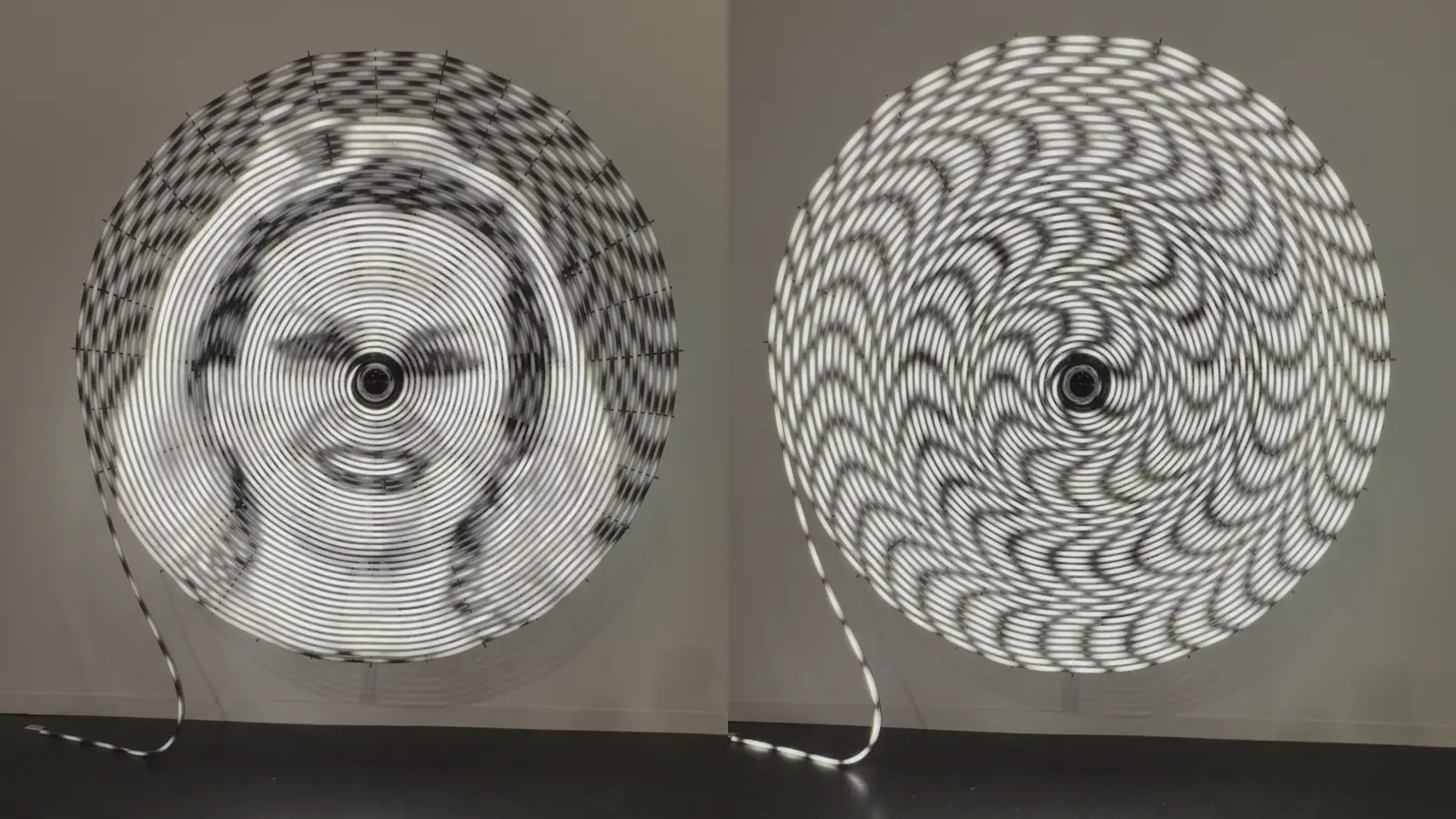
One of the first works I encountered as I entered the Zero 10 space was by Rafael Lozano-Hemmer, presented by bitforms gallery and Max Estrella as part of the exhibition Panoptic Chiasma. You are drawn in by the curiosity of its forms, and only after a while do you realize that you are staring at a camera that is filming you. For an instant you flinch, you think, “Hey, what about my privacy?”
But then you notice that your photographed image has been absorbed by the work, which swirls it inside itself until it becomes part of the piece, and then engulfs it until it disappears. And you stay, caught, strangely enchanted. It took me some minutes, plus the gallerist’s explanation, to fully understand it, but I have to say that it is a work that fascinated me a lot.
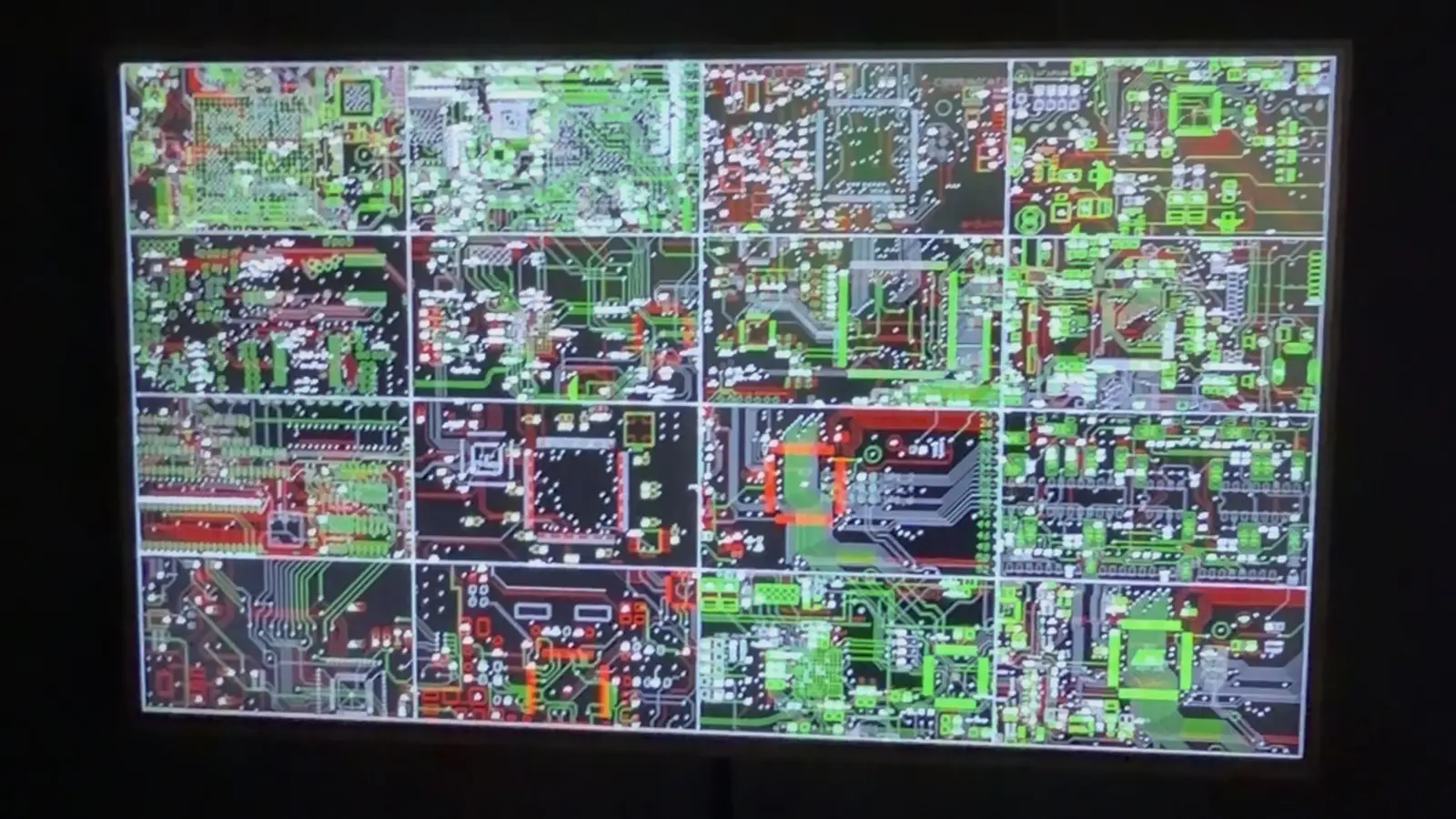
Ryoji Ikeda‘s work, an installation of monitors running different algorithms in a loop, presented by Almine Rech (data.gram [n°11], 2026), showed how attractive algorithms can be in their looping. The patterns had been selected, among countless possibilities, by the artist himself.
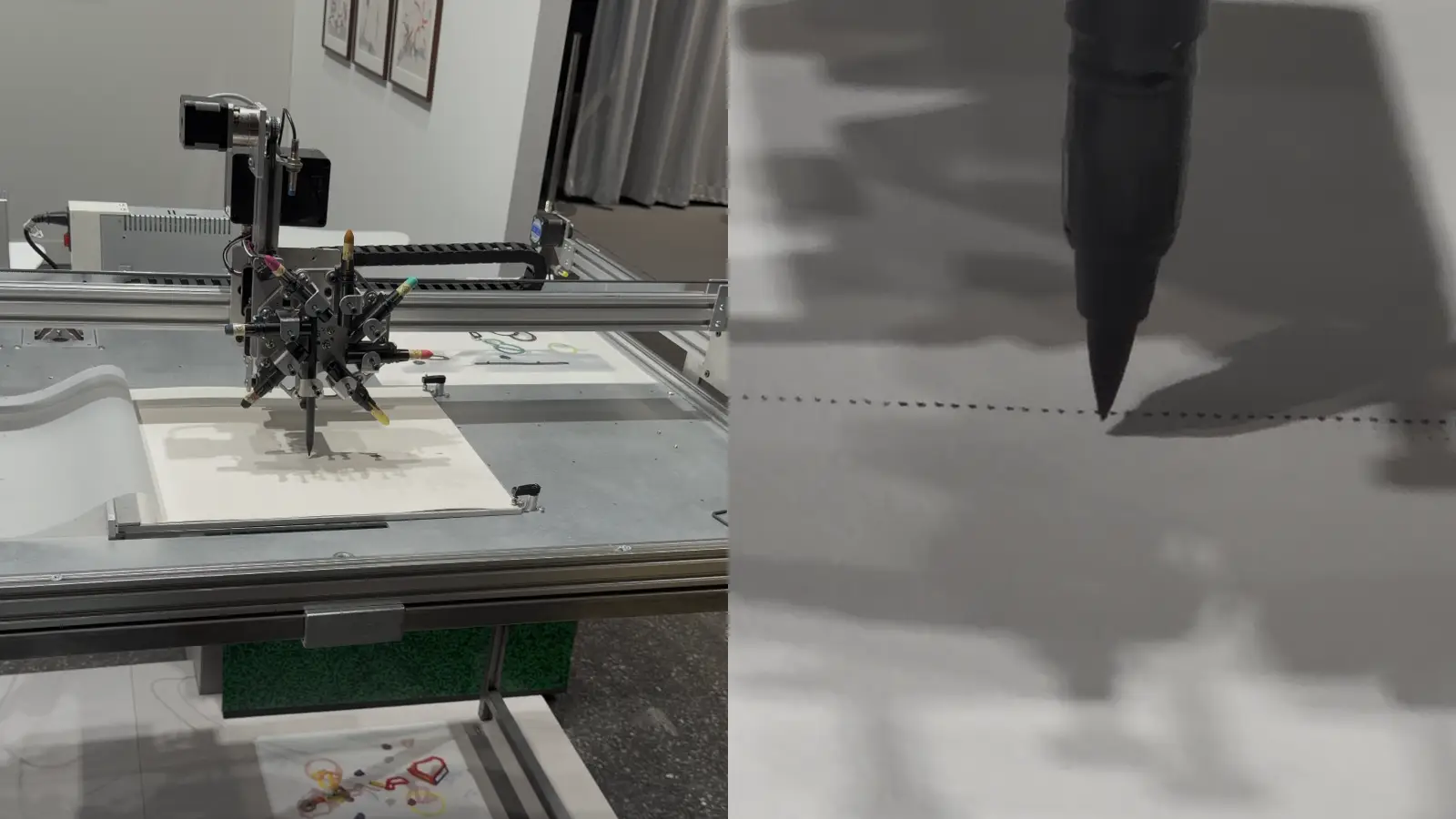
Still within the Zero 10 space, there was a machine that paints by itself: I filmed it, I watched it for a while, and then it struck me as foolish to waste time watching a machine draw. This device was the Interactive Plotter Interface presented by Art Blocks, a mechanical drawing arm translating William Mapan’s algorithmic code, Dances on Shadows (DOS), into physical lines.
The ease with which it drew, guided by mathematical calculations, disturbed me in some way. It immediately brought to mind Jean Tinguely and his iconic Méta-Matics from the 1950s – specifically his Méta-Matic No. 10.
The queue, and the question of time
Art Basel made me reflect a great deal on the matter of time. Digital art has a peculiar relationship with the viewer’s time. You would like to linger in front of the immersive experiences, but the experience is often fast, and the line behind you is always long.
You queue, you finally stand alone with the work, you become the protagonist of that space for a moment, and immediately it is time to give your place to someone else. You step back to the second row, you keep watching, but you are no longer the one living the work. You observe it from a distance. And if, instead, you happen to have time to observe that work, once you have understood it, you move on. You do not go back to see a digital work again, unless something has truly stirred your emotions.
Digital art is an art in movement, which seems to dissolve in the very instant it shifts from one state of movement to the next. It stays in your memory, perhaps. But it is as if the time to grasp its meaning were never enough.
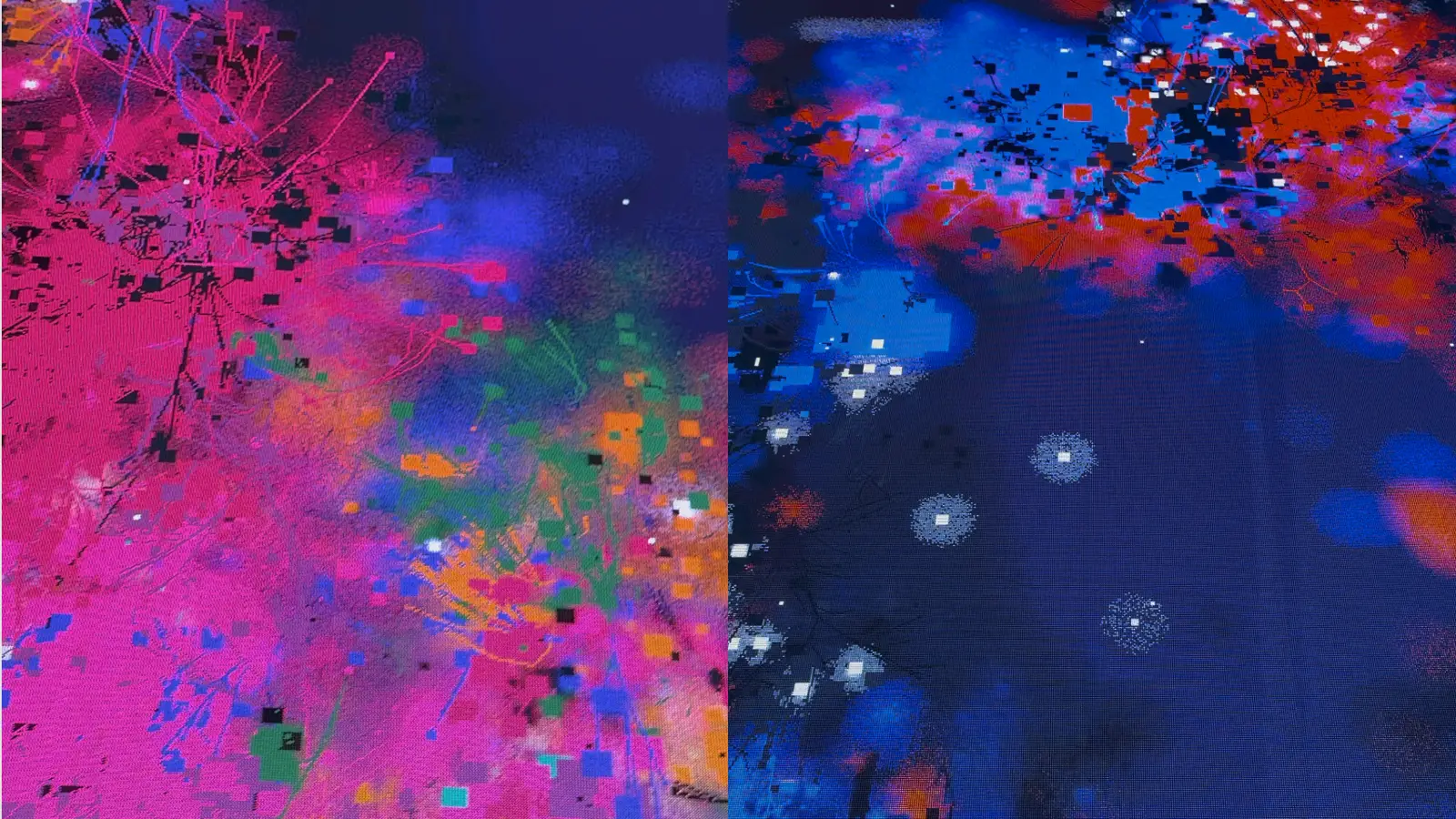
The numbers say digital art has won: at Zero 10, John Gerrard’s STANDARD (2022) sold for 500,000 dollars, works by Rafael Lozano-Hemmer found buyers, and twelve works by Vera Molnár, the pioneer who has been making algorithmic art since 1968, were placed with collectors in Europe and the United States. Digital art has a history and a market. It has conquered the market, but at what cost to the viewer and their time?
In traditional art, time belongs to the viewer. In front of Botticelli’s Venus I can stay an hour, or thirty seconds, or come back tomorrow. Contemplation lasts as long as I decide. In immersive and digital art the order is reversed: first I have to immerse myself, give my body and my time, and only afterward can I decide whether it was worth it. The time is managed by the one who creates, no longer left to the one who looks. And yet it is exactly there, in that instant of contemplation, that the viewer becomes a critic and is reflected in the work.
Unlimited: where the time is, and where it is taken
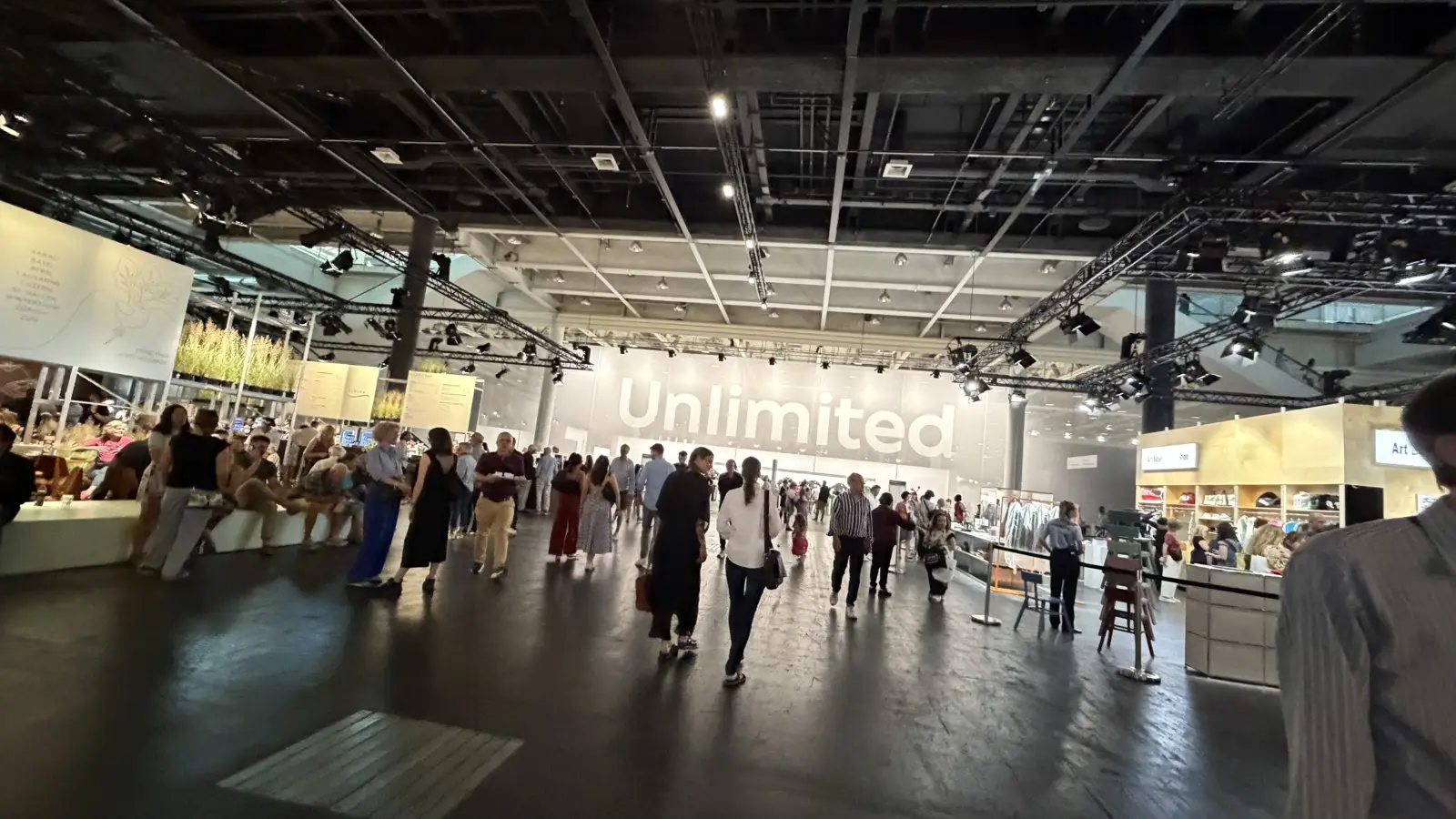
Unlimited, curated for the first time by Ruba Katrib of MoMA PS1, brought together 59 large-scale projects.
As soon as I entered, before the Unlimited hall, I had on my left a corner from a very famous screen brand, which offered you the chance to “generate” your own algorithm-created digital “art” to be shown on their screens: an experience that was more advertising than art.
As an artist who bridges the digital and analog worlds, I have a brief reflection on this. Art initially transitioned into the digital realm thanks to the creation of the pixel and photography, which allowed us to transform analog art into digital surfaces and build digital works through pixel aggregations. Later, AI introduced a casual, unpredictable basis to creativity – a randomness that intrigues the artist’s mind and hurls it into the depths of latent space.
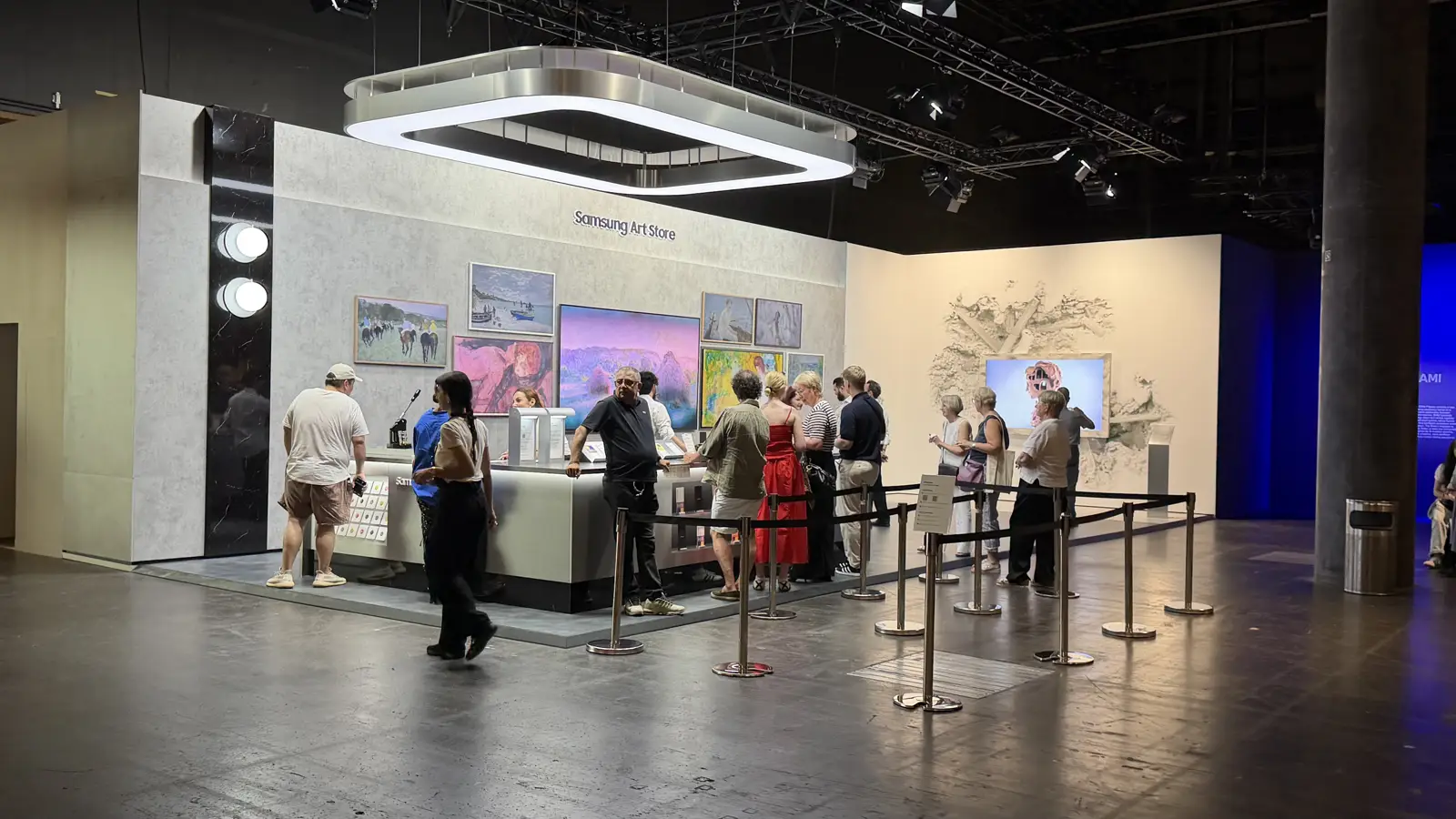
All this to say that digital surfaces, such as the screens exhibited on this occasion, could have offered an extraordinary expo of truly excellent digital artists. However, I also understand that this illusion of democratization was a marketing gimmick; though I consider it culturally poor, it succeeded in engaging a larger crowd.

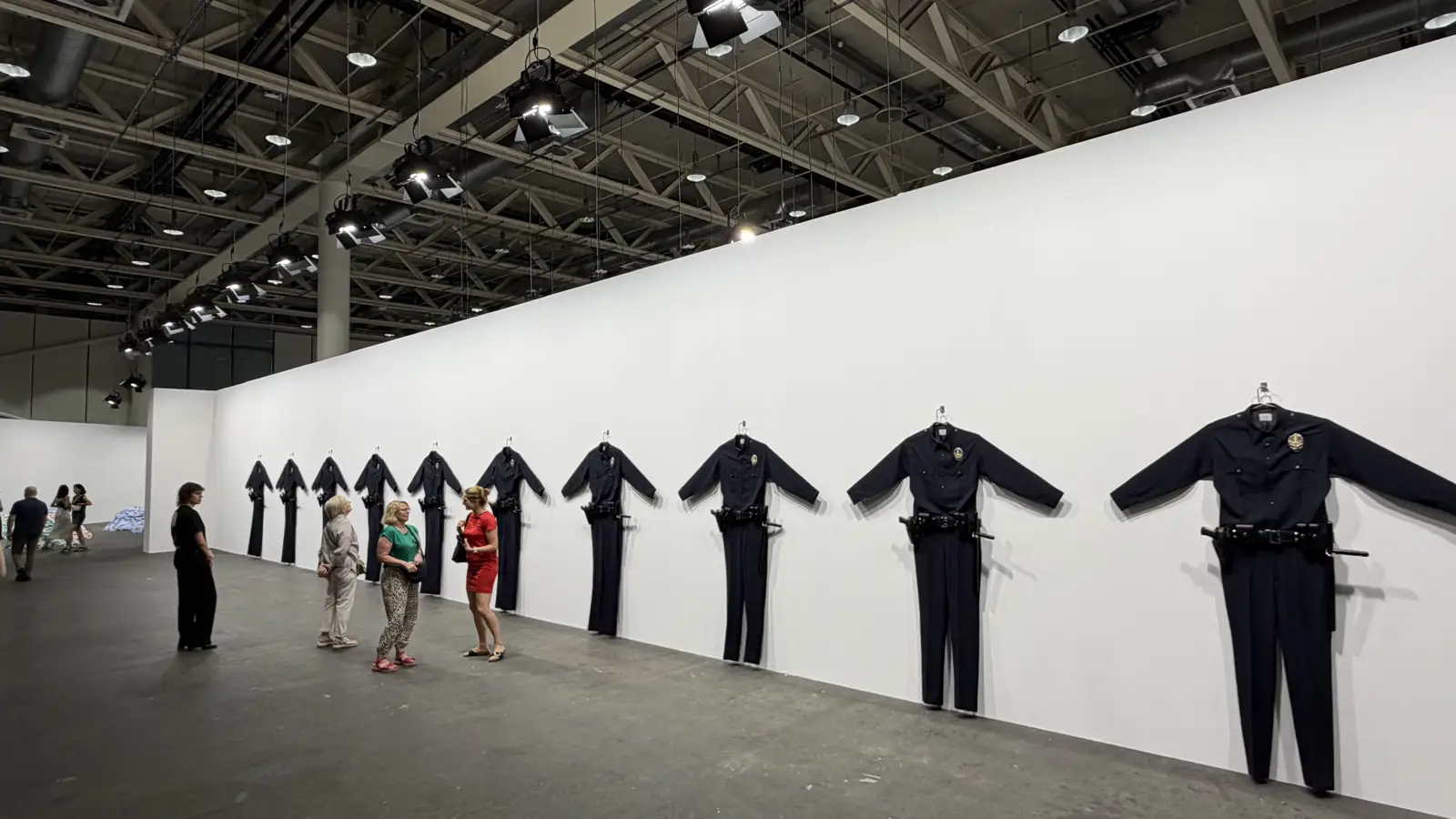
At the entrance to Unlimited, serving as the exhibition’s urgent opening statement, stood Chris Burden’s monumental installation L.A.P.D. Uniforms (1993). These thirty oversized, imposing police uniforms hung like an authoritarian blockade to evoke a sense of systemic war, as if Ruba Katrib curated them to remind us from the very outset that there is no truce – the world remains in a state of constant social and geopolitical conflict.
Just to the left was Cairns (2026) by Benoît Piéron: soft fabric mounds shaped like mountain landmarks and laid on the floor, made by sewing together discarded old hospital sheets.
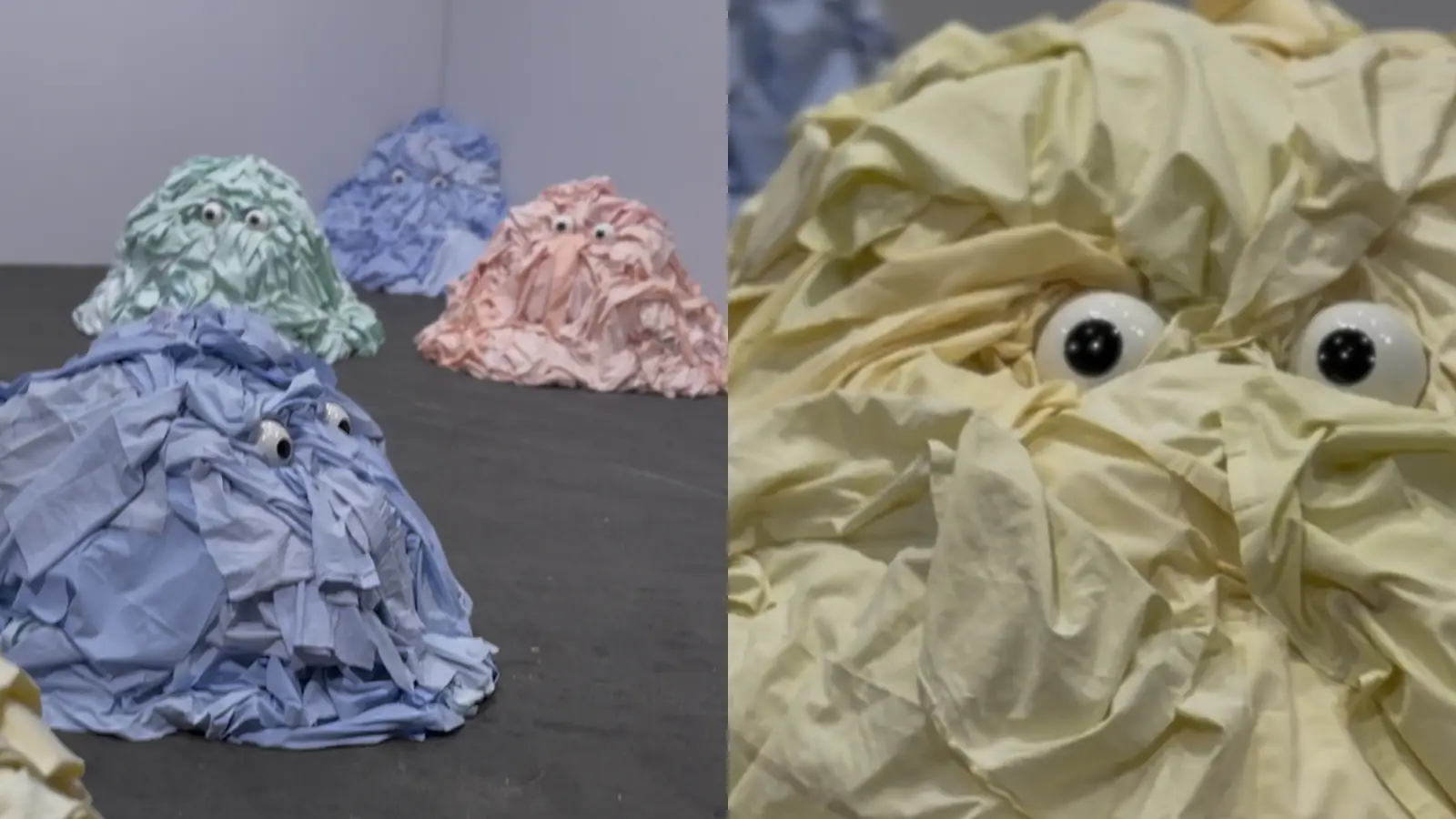
From these textile piles emerged small ceramic eyes that seemed to watch you, playful and unsettling. The artist works on themes of illness and healing, and here transformed the vulnerability of the body into a space of care, imagination and irony.
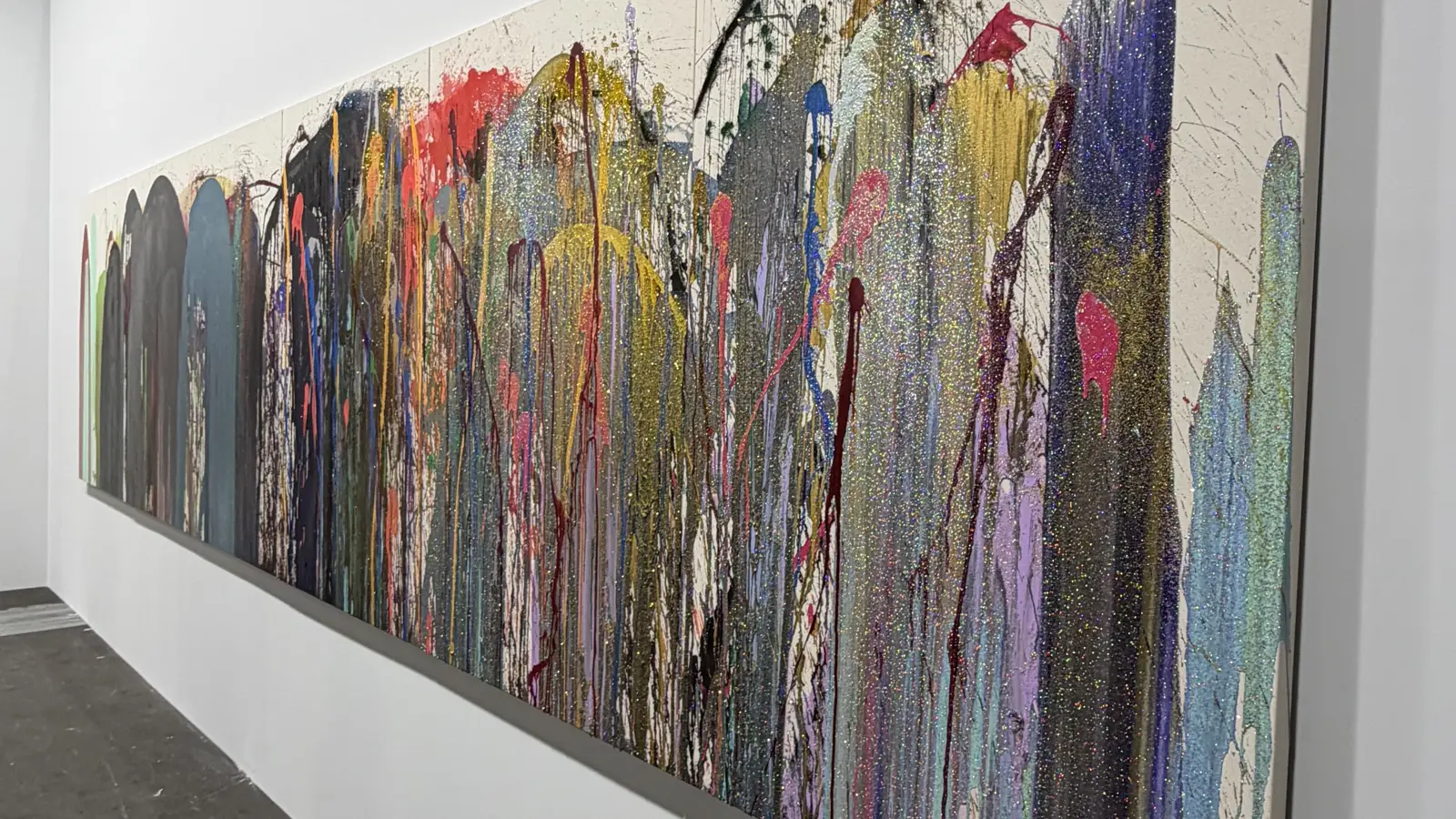
It is no accident that among the most-discussed works was Lash (2026) by John Armleder, fifteen luminous canvases with cascading, crystallized pigments, which reminded me of the uneven brightness of a screen: painting that imitates the brightness of the digital while remaining reassuring matter. His canvases are among the most beautiful things I saw.
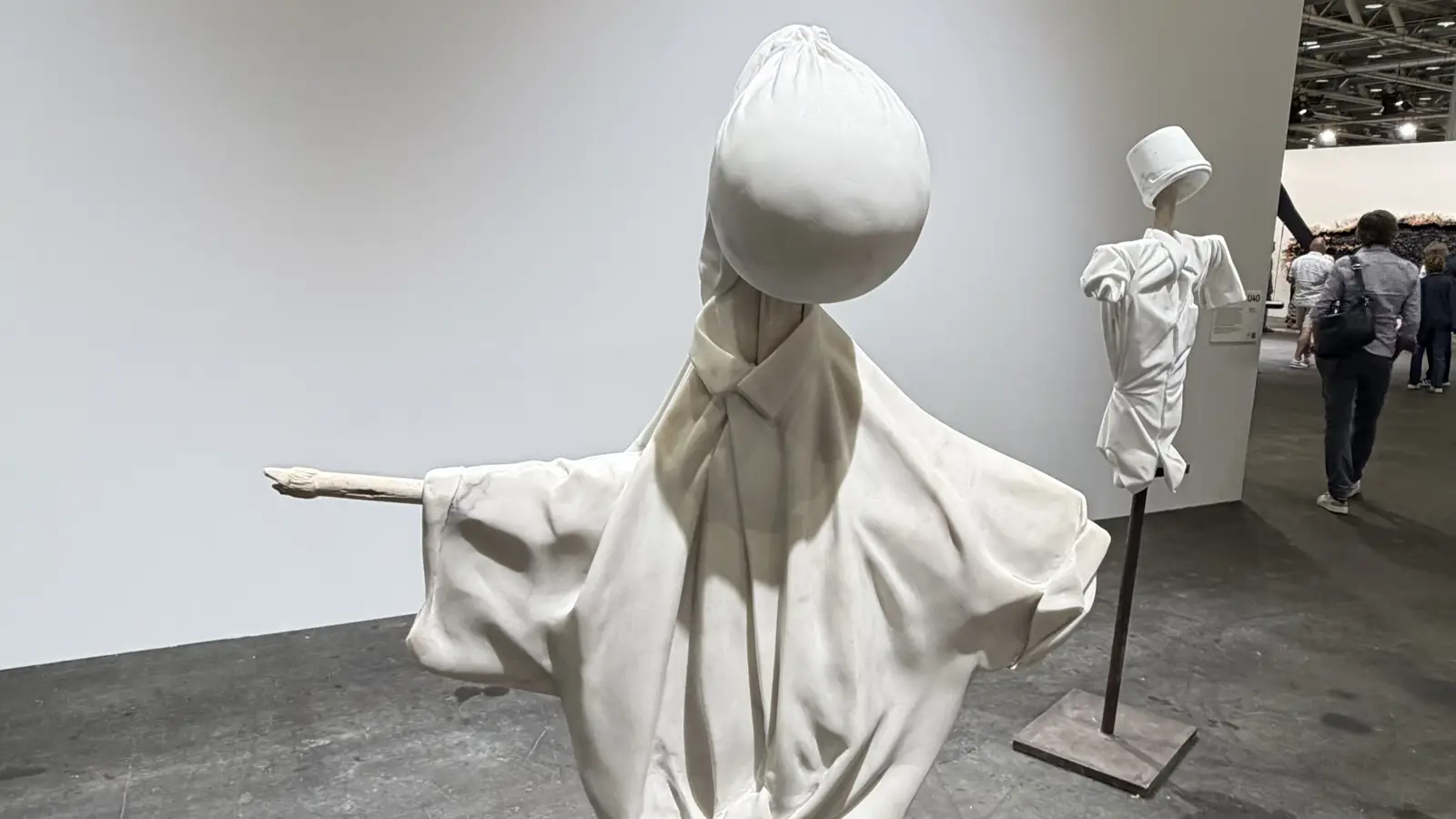
Another, very curious, was Army of Scarecrows (2026) by Andreas Lolis, three life-sized scarecrows carved entirely in marble, which at first glance you take for plastic, because marble is the last material you expect to see at Art Basel in 2026.
It made me think of the draped veils in Michelangelo’s sculptures. And once again I find myself thinking: is it easier to sell a marble sculpture, whatever its subject, or a piece of digital content?
Shortly after, there was another truly interesting installation: Junko Oki with Anthology (2026): a spiral embroidery on a straw structure, with small sculptures made of used needles, donated from all over Japan according to the hari-kuyo ritual, the requiem for worn-out needles.
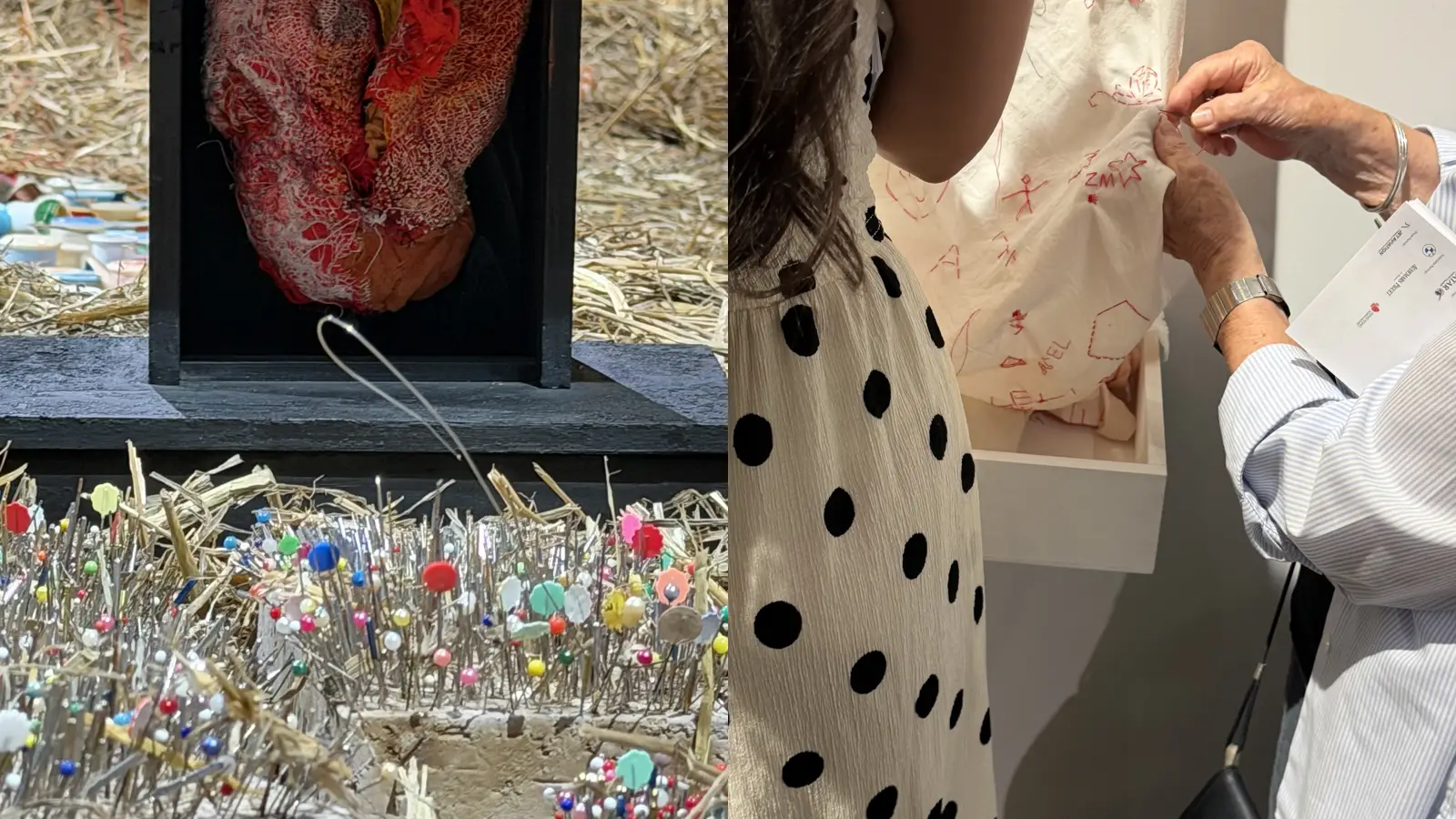
On the wall there was a cloth where people could stop to sew and embroider. There the viewer did not submit to an imposed time: they took part with their own gesture, their own rhythm. Sewing is the slowest and most human time there is, the opposite of the queue in front of the digital works.
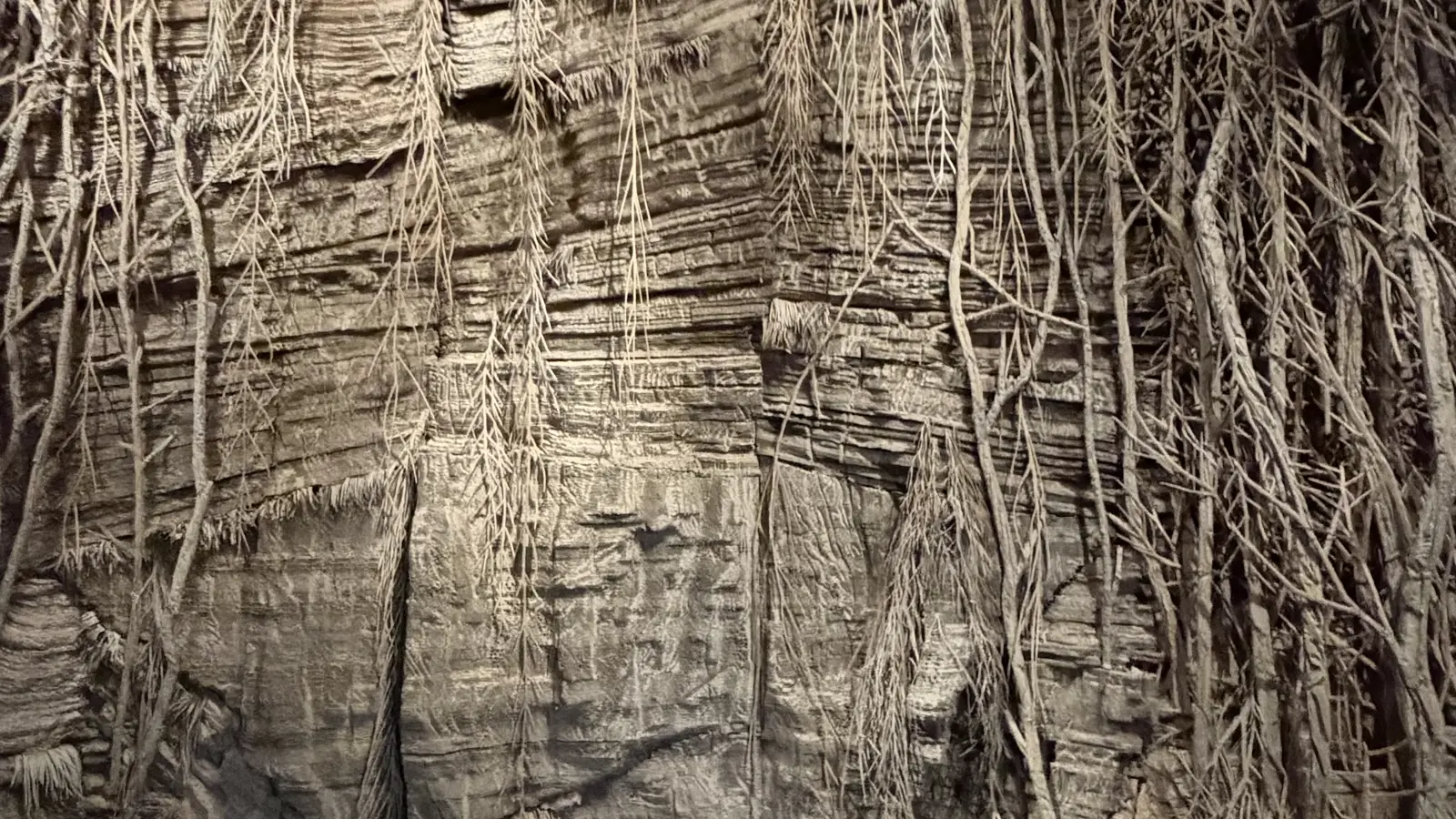
I was very drawn to Panorama (2016) by Eva Jospin, a forest sculpted from cardboard that you enter through a narrow opening. Beautiful. Yet, to step inside, you had to queue – a reminder that even an entirely analog, tactile experience has its physical boundaries in an era obsessed with instant access. Inside, Jospin uses the raw vulnerability of cardboard to challenge our illusion of mastery over nature, forcing us to slow down and accept the natural limit of time and space.
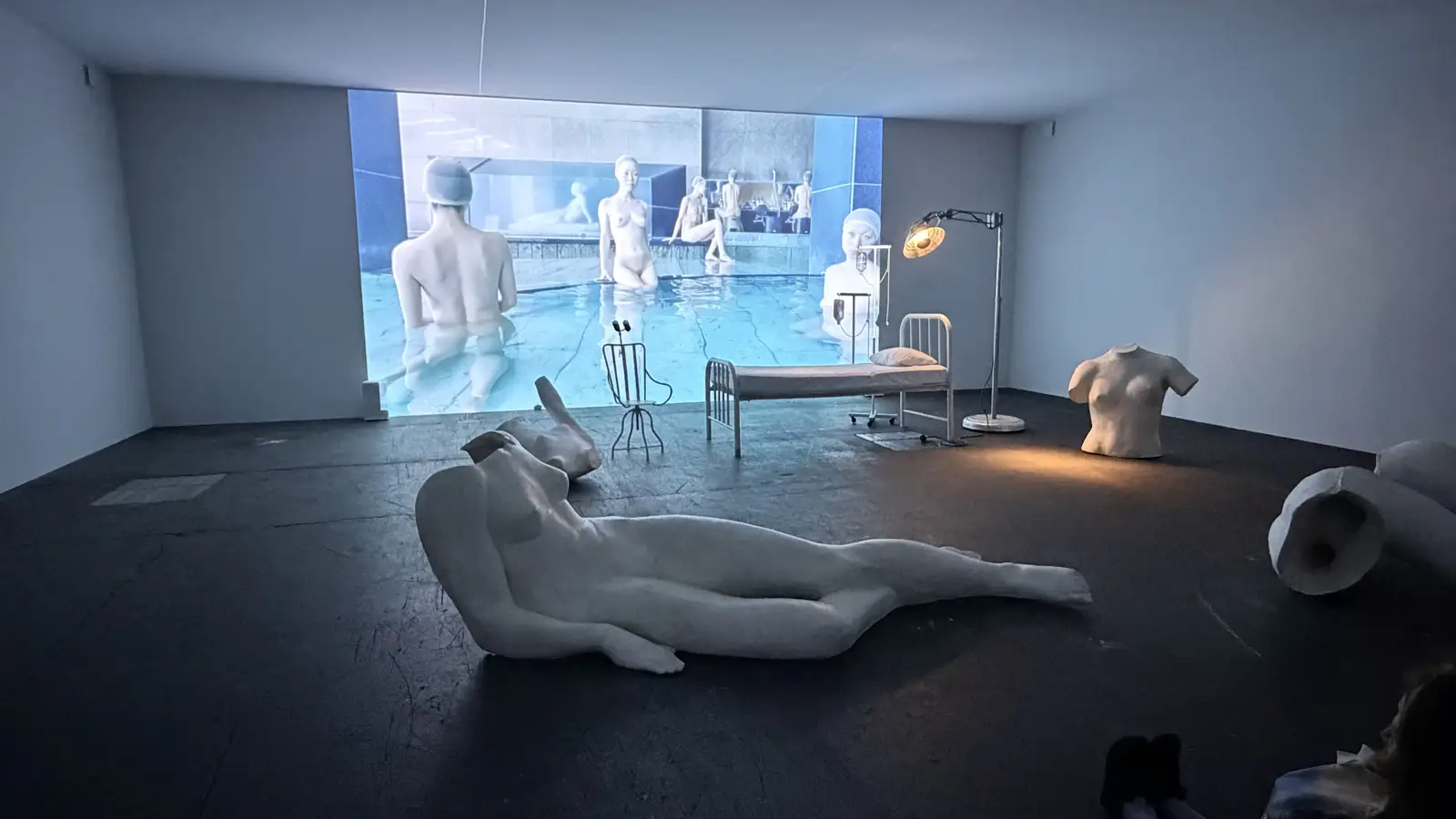
Vanessa Beecroft’s Untitled (Izanami) (2025) was fascinating: a 32-minute film featuring five plaster sculptures, a hospital bed, a chair, and a lamp. The women’s bodies, their intimate parts veiled by flesh-pink garments, created a taut tension between the expectation of seeing the forbidden and never quite accessing it. What remains strikes the imagination precisely because you only glimpse the forms. I loved it; I would have stayed for the entire loop.
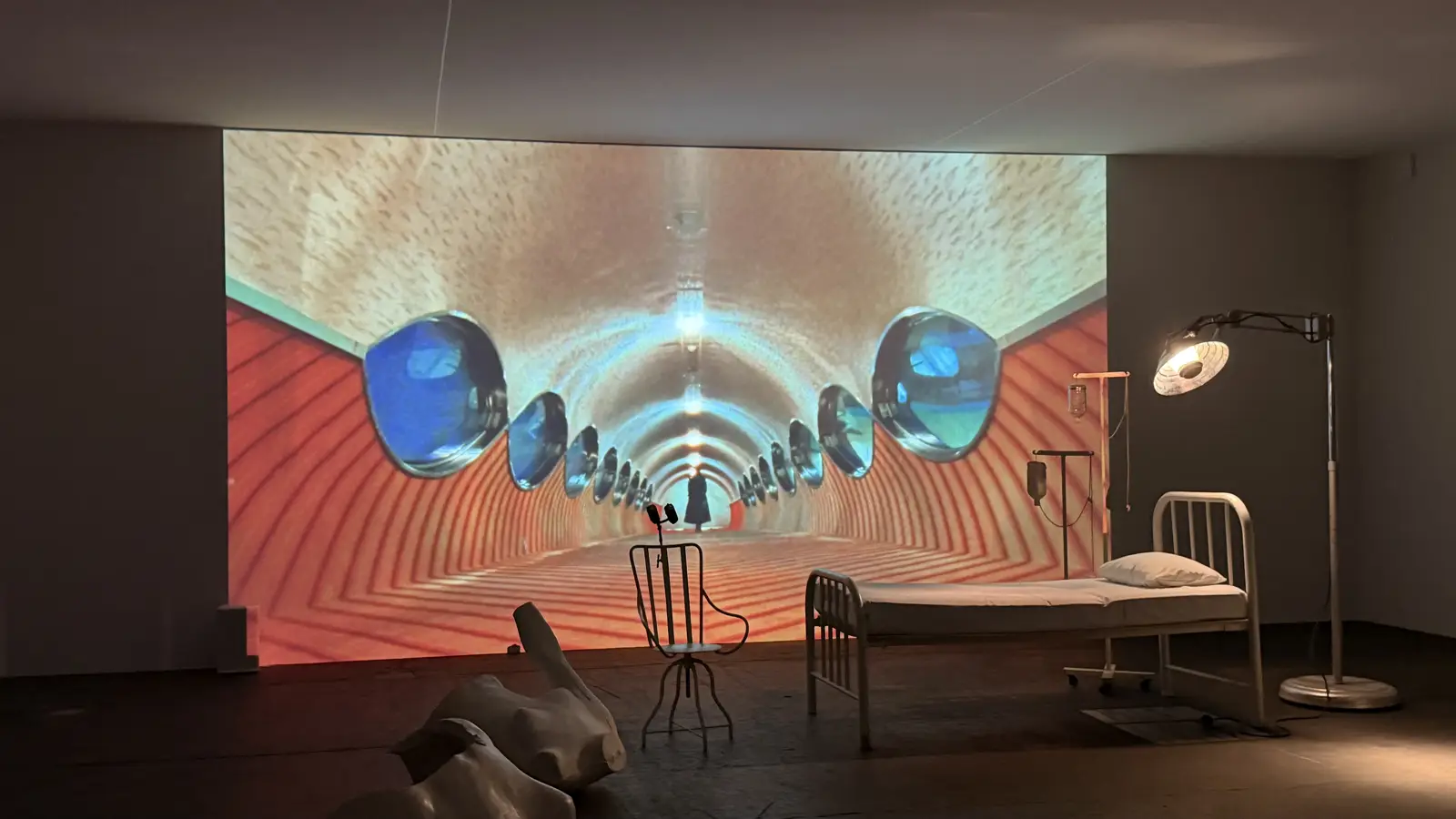 Yet, here too, the viewer’s time is strictly rationed by the artist – the film lasts 32 minutes, and she decides the terms of engagement. Confronted by the excellent quality of this video installation, I deliberately surrendered my time to her will, even if, ultimately, we rarely watch video art until the end, always restless to take our time back.
The galleries, and the Artists
Inside the magnificent architecture of Art Basel, with its rotating stairs, its inner courtyard, its long corridors lined with works of every kind, the Galleries section unfolded. When I say that artists, in this historical moment, seem confused, I mean it. What is art in 2026? What is not art? Can we still carry forward the Dadaist idea that anything can become art? Hasn’t that passed by now? And hand-painted canvases, aren’t they obsolete? And sculptures and writing made of neon, aren’t they ends in themselves?
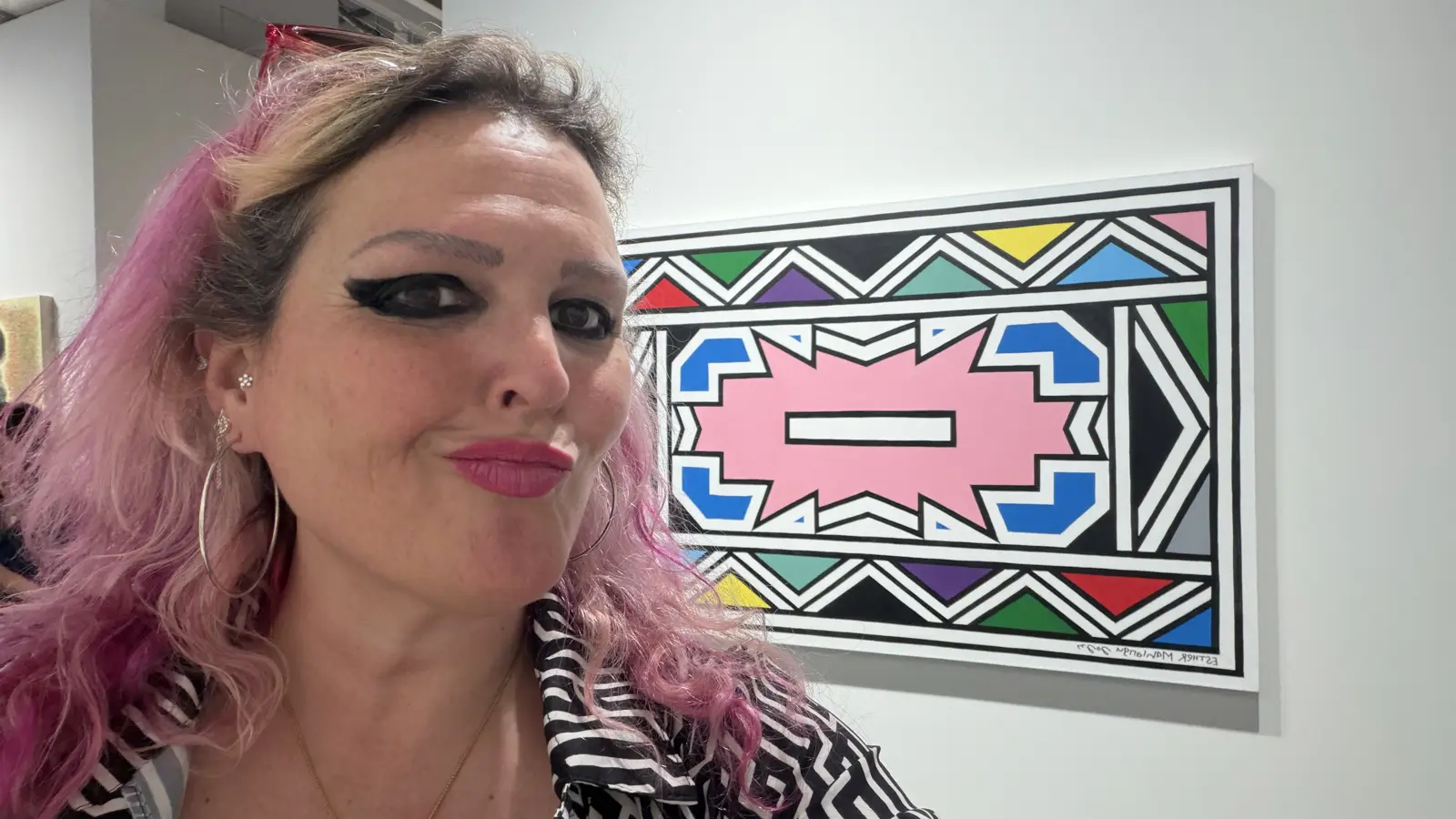
And yet the answer of traditional art keeps reappearing. Esther Mahlangu was present at Art Basel with Jenkins Johnson Gallery, showing the tradition passed down from mother to daughter: that of painting South African houses with very particular geometric figures, using brushes made of bundled chicken feathers and taut string to draw straight lines. The most analog work I have ever seen made, and yet it coexisted in the same space and time as digital art, within the same fair. And Picasso, whose Le peintre et son modèle dans un paysage sold here for 35 million dollars, makes you think immediately: “now this is art”. So does a painting sell because it is physical matter? And how do you sell a digital artwork?
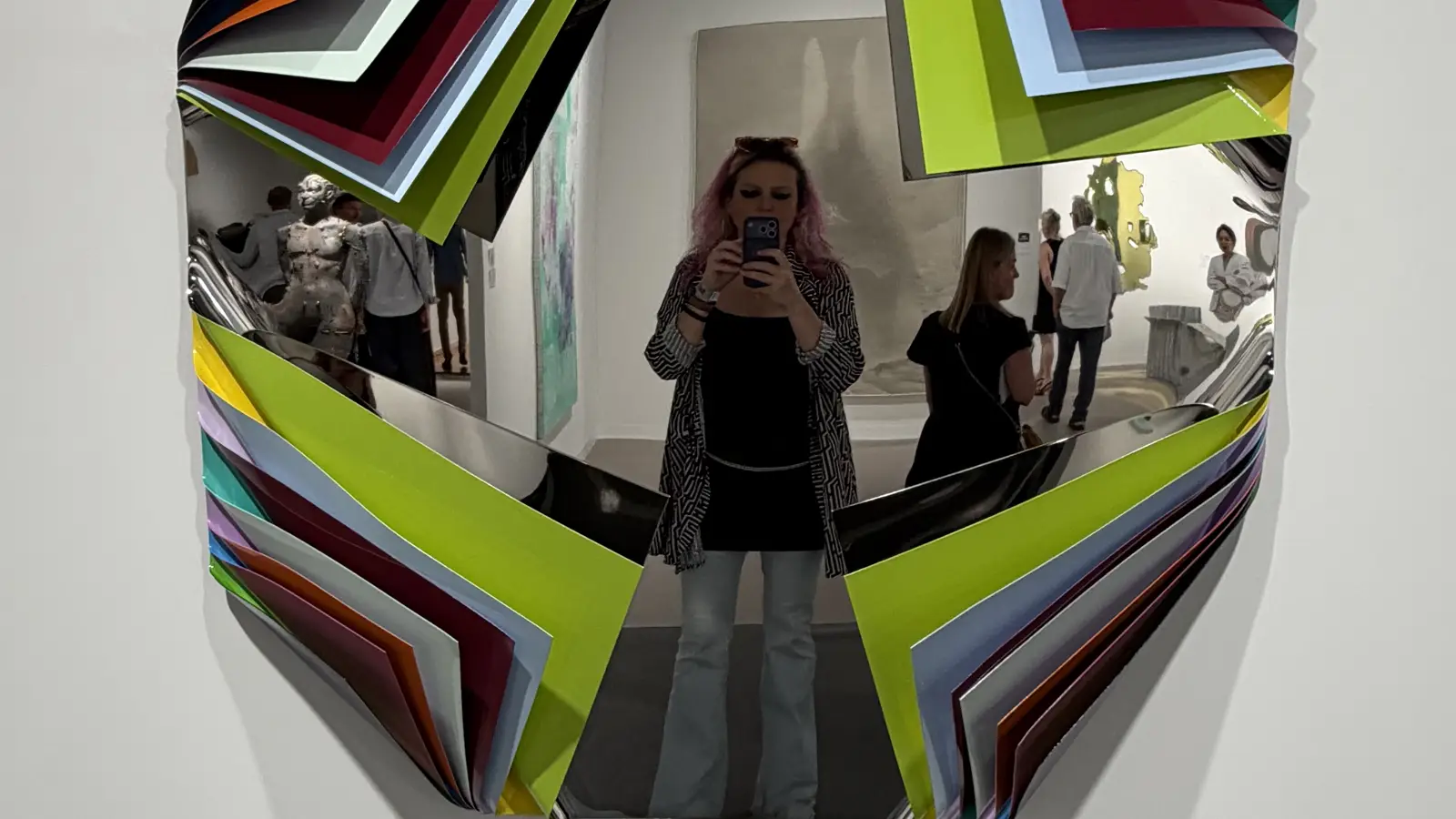
The reflective surfaces, the works in which the viewer sees themselves, glimpses themselves, is reflected, is projected inside the artwork, are the ones we are most drawn to. Perhaps because, like Narcissus, we are eternally attracted to our own image, which changes continuously and of which we never tire. So the mirrors, the reflective surfaces, the digital art that reproduces the form and image of the body, are all genuinely attractive works.
In the Renaissance, the person being portrayed was in turn drawn to their own painting, and it served to show their figure even when they were not present. But back then the portrait required time, posing, and another human being who painted you. Today the reflection is instant. I no longer need someone to paint me. It is enough for the artist to let me see myself reflected in the work, and in exchange the artist gets my time, my attention, my presence in front of the piece.

My art at the station
It is the attempt to stir emotion in the viewer that I am also seeking with my own art, shown in a collateral event of Art Basel. The direction I am working in with my paintings, part analog and part digital, made from real photography of human anatomies and bodies that blend with AI and are brought to life by Artivive’s augmented reality, tries to give humanity back to the digital.
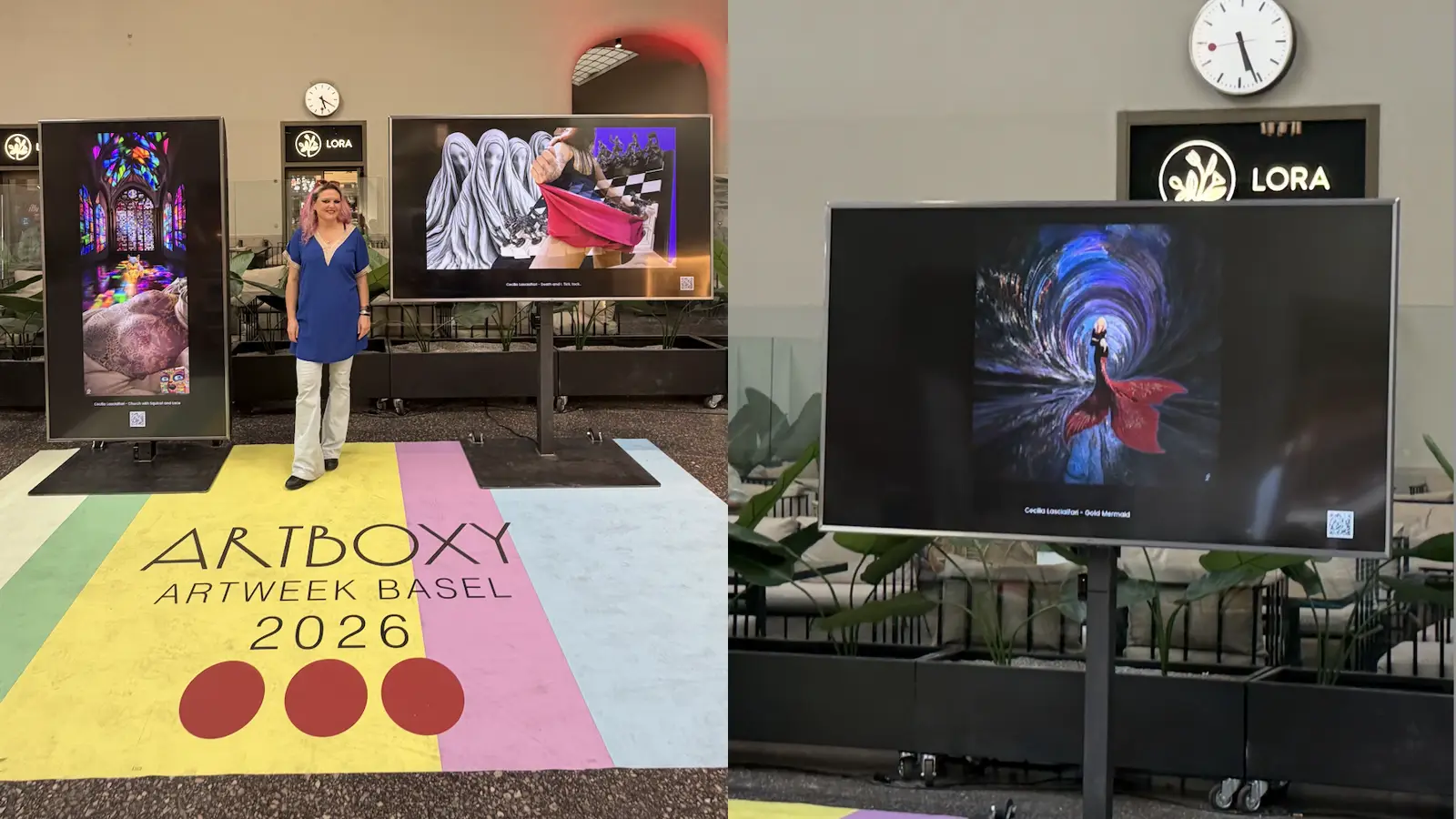
They were shown with ARTBOXY, inside Basel’s railway station, where people passing through would stop, see the digital works on the screens and the analog ones beside them, and could discover the AR layer for as long as they wished. There, the time was theirs.
You can find more informations on my artworks on my personal website: Cecilia Lascialfari
Can AI give the time back?
It is as if the digital artist had taken the viewer’s time. Can we use AI to change how time is managed? If we think of DATALAND and of how Europe is moving in the field of digital art, does AI lead us even more to abandon ourselves into the hands of the artist who guides us? Or can we use AI, algorithms, latent space, the digital, to give time back to the viewer, instead of taking it away?
Art reflects what you are. The viewer who feels emotion in front of a work reflects themselves in what they are experiencing, whatever kind of art it is: digital, analog, photographic, musical. Art reflects you.
Europe’s digital answer to DATALAND, honestly, did not overwhelm me. I expected more scale, more continuity, more generative artificial intelligence. As if the artists had not played enough, as if something, perhaps a cultural reticence tied to the European territory, was still holding them back from truly exploring latent space. But maybe we just need a little more time, and confusion is fine too, digital art beside analog art, as long as, sooner or later, something emerges that gives us back both emotion and time.
Art Basel’s Conversations program, hosted this year in a new auditorium in the Eventhalle, recorded a record 3,600 attendees. Amid the constant movement of analog art confronting the digital, it was listening, dialogue and the slow time of thought that drew the largest audience.
ART BASEL
Art Basel is the world’s leading international art fair for modern and contemporary art. Founded in Switzerland in 1970, it serves as a premier global marketplace where galleries, collectors, curators, and artists connect to exhibit, buy, and sell high-value paintings, sculptures, installations, and digital works.
- Art Basel Paris: Held at the Grand Palais.
- Art Basel Miami Beach: Taking place in December, it blends the art market with high-end social and nightlife events.
- Art Basel Hong Kong: Connecting the global art scene with the Asian market.
- Galleries & Artists: Elite and emerging galleries apply to be juried in, using the fair to launch artists’ careers and showcase museum-quality work.
- Collectors & Celebrities: High-net-worth individuals, museum curators, and celebrities attend to purchase art and mingle.
- The Public: While serious buying happens behind the scenes and in gallery booths, the fairs host large-scale public installations, film programs, and city-wide exhibitions.
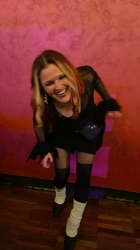
Professionally she works as an AI Data Analyst & Digital Content Strategist.
She is a researcher in the field of AI-generated images and copyright, and Lead Art & Creativity for Women in AI Italy.
Her artistic practice combines Analogue Art, Digital Art, Generative AI, and Augmented Reality; she has exhibited internationally, including at the Venice Biennale 2024, Art Basel Week, and Swiss Art Expo Zurich.
Co-author of a 2026 Springer volume on AI ethics, she is the Italian Representative of Artivive, organiser of AWE Nite Florence, and Founder and Editorial Director of ARea6DoF, an online journal registered with the Italian Court.
Personal website: cecilialascialfari.it
LinkedIn: https://www.linkedin.com/in/cecilialascialfari/
- ART BASEL 2026, UNLIMITED and the Digital Space of ZERO 10 - 26/06/2026
- DATALAND: THE MUSEUM OF AI ARTS open in Los Angeles - 05/06/2026
- AWE NITE FLORENCE: “SMART GLASSES AI, AR, AND MORE!” - 28/02/2026